Above the Treeline and Far from Help: The Hidden Medical Crisis Risk at Utah's Ski Resorts
Utah's ski resorts are among the most celebrated in North America. From the powder-blanketed runs of Alta and Snowbird in Little Cottonwood Canyon to the sprawling terrain of Park City Mountain and Deer Valley, the Beehive State draws over five million skier visits annually. But behind the glamour of "the Greatest Snow on Earth" lies a sobering reality that resort medical teams confront every single season: when a serious medical emergency occurs at elevation, the rules of emergency care change in ways most visitors never anticipate.
This is not a theoretical concern. Ski patrol teams across Utah respond to hundreds of medical calls each season, ranging from traumatic fractures and spinal injuries to sudden cardiac events, severe hypothermia, and altitude-induced crises. Each of these emergencies is complicated by factors that simply do not exist in an urban emergency room setting — factors that every skier, snowboarder, and resort visitor in Utah should understand.
The Elevation Factor: How Altitude Reshapes Medical Emergencies
Most of Utah's major ski resorts operate at base elevations between 6,800 and 8,000 feet, with summit terrain frequently exceeding 10,000 to 11,000 feet. At these altitudes, the partial pressure of oxygen in the atmosphere is significantly reduced. For visitors arriving from lower elevations — particularly those flying into Salt Lake City and heading directly to the slopes — the body has had little or no time to acclimatize.
This matters enormously in a cardiac emergency. At high altitude, a heart attack presents with symptoms that can be more difficult to distinguish from altitude sickness, dehydration, or simple exertion. Chest tightness, shortness of breath, lightheadedness, and nausea are common to all of these conditions. Ski patrol medics are trained to treat any combination of these symptoms with urgency, but visitors who dismiss warning signs as normal fatigue may delay calling for help until the situation becomes critical.
Altitude also affects how the body responds to resuscitation. Studies have shown that cardiopulmonary resuscitation (CPR) is less effective at high elevation due to reduced oxygen availability. Automated external defibrillators (AEDs), while still the standard of care, must be deployed faster and with greater precision when every breath a rescuer delivers carries less oxygen than it would at sea level.
Distance Is the Enemy: Why Transport Time Defines Outcomes
In urban Utah — Salt Lake City, Provo, Ogden — an ambulance can typically reach a patient and deliver them to a trauma center within minutes. At a remote ski resort, that equation changes dramatically.
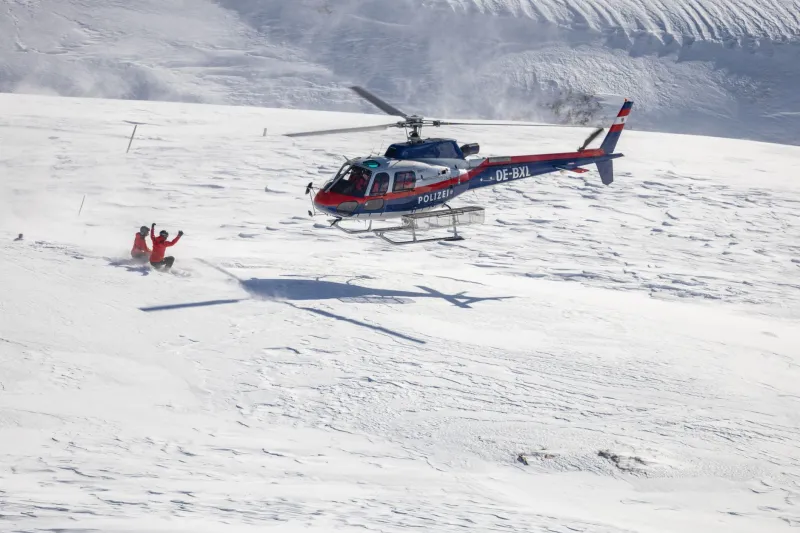
Little Cottonwood Canyon, which provides access to Alta and Snowbird, is a single-road corridor subject to avalanche closures, traffic congestion, and winter driving hazards. During peak season, the canyon road can back up for miles, effectively cutting off ground ambulance access entirely. In these conditions, the resort's ski patrol team becomes the sole medical resource for an extended period. Air transport via helicopter is available in many scenarios, but weather conditions — whiteout snowfall, high winds, and low visibility — frequently ground those aircraft at precisely the moments when they are most needed.
Park City and the Wasatch Back resorts face similar constraints. While Interstate 80 and State Route 224 offer somewhat more reliable access than canyon roads, winter storm conditions can extend transport times to Salt Lake-area trauma centers to 45 minutes or beyond. For a patient experiencing a stroke, a severe traumatic brain injury, or a STEMI cardiac event, that window can determine whether recovery is possible.
What Ski Patrol Can — and Cannot — Do
Utah's resort ski patrol teams are genuinely among the most skilled pre-hospital responders in the state. Many hold national certifications in outdoor emergency care, wilderness first responder credentials, or full EMT licensure. They carry advanced medical equipment including AEDs, oxygen delivery systems, spinal immobilization devices, and in some cases, medications for pain management and anaphylaxis.
However, ski patrol operates within the same fundamental limitation as all pre-hospital care: they can stabilize, but they cannot definitively treat. A patroller can recognize the signs of a stroke and initiate rapid evacuation, but the clot-busting medications and imaging equipment that determine a stroke patient's outcome exist only at a hospital. A patroller can begin CPR and deliver a defibrillating shock, but the cardiac catheterization lab that saves a heart attack patient's life is an hour's drive away.
This gap is precisely why the minutes before ski patrol arrives are not wasted minutes. They are critical minutes — and the actions of bystanders in that window matter.
What Skiers and Snowboarders Must Know Before They Ride
Every person who visits a Utah ski resort should treat the mountain as a remote environment. That mindset shift carries practical implications.
Know the emergency call number before you need it. Most Utah resorts have a dedicated ski patrol emergency line in addition to standard 911 access. Cell coverage on the mountain varies significantly; know which areas of your resort have reliable service and which do not. Consider carrying a communication device such as a satellite messenger if you ski in backcountry-adjacent terrain.
Recognize the warning signs that demand immediate action. Sudden, severe headache — particularly one that feels unlike any headache experienced before — can signal a hemorrhagic stroke or dangerous altitude-related cerebral swelling. Chest pain, jaw pain, or pain radiating down the left arm during exertion warrants an immediate stop and a call for help. Confusion, slurred speech, or sudden inability to maintain balance in a companion should trigger an emergency call without hesitation.
Do not assume symptoms are altitude sickness and wait them out. Altitude sickness is real and common on Utah's slopes, but it is a diagnosis of exclusion — meaning other, more dangerous causes of similar symptoms must be ruled out first. If someone in your group is deteriorating rather than improving, call ski patrol.
Prepare before you arrive. Visitors with known cardiac conditions, clotting disorders, or a history of altitude-related illness should consult a physician before skiing Utah's high-elevation terrain. Arriving a day early to acclimatize in Salt Lake City — situated at approximately 4,300 feet — reduces, though does not eliminate, the physiological stress of rapid ascent.
The Broader System: How Utah Resorts Are Adapting
The state's resort community has not been passive in addressing these challenges. Several Utah resorts have invested in expanded on-mountain medical facilities, including warming huts equipped with advanced cardiac monitoring equipment and telemedicine capabilities that allow on-mountain medics to consult with emergency physicians in real time. The integration of telemedicine into ski patrol operations represents one of the most significant advances in resort emergency care in recent years, allowing a Salt Lake City emergency physician to guide a patrol medic through a complex assessment while the patient is still on the mountain.
Discussions within Utah's emergency services community have also focused on pre-positioning helicopter assets during peak weekends, maintaining dedicated canyon access agreements for emergency vehicles, and expanding AED placement throughout resort terrain.
These are meaningful improvements. But no system replaces the value of an informed public. When a skier recognizes a medical emergency early, calls for help immediately, and begins basic life-sustaining measures while patrol responds, outcomes improve — regardless of how remote the terrain.
The mountain does not grade on a curve. But preparation, knowledge, and swift action have saved lives on Utah's slopes before, and they will again.
If you or someone in your group experiences a medical emergency on a Utah ski resort, call ski patrol immediately using the resort's designated emergency number or dial 911. Do not move a person with a potential spinal injury unless they are in immediate danger. Begin hands-only CPR if the person is unresponsive and not breathing normally, and continue until trained responders arrive.