Above the Warning Signs: Recognizing Stroke at Elevation in Utah's High-Country Communities
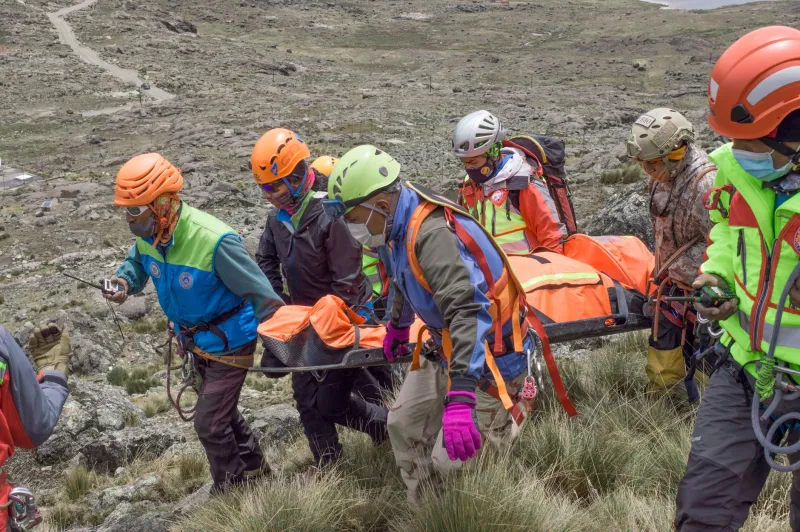
Utah is not a flat state — in geography or in risk. With more than half of the state's population living above 4,000 feet and communities like Park City, Cedar City, and Moab situated at elevations that would qualify as high altitude by clinical standards, the way Utahns experience medical emergencies is shaped by terrain in ways that most emergency guidance fails to address.
Stroke is among the most time-sensitive medical crises a person can face. The phrase "time is brain" is not hyperbole — every minute of untreated stroke destroys roughly 1.9 million neurons. Yet in Utah's mountain communities, the standard tools for recognizing stroke face an additional challenge: altitude itself can mimic, mask, or amplify the very symptoms that should trigger an emergency response.
Understanding this overlap is not a matter of academic interest. It is a practical survival skill for anyone living, working, or recreating in Utah's high-elevation landscape.
Why Elevation Changes the Stroke Equation
At higher altitudes, the partial pressure of oxygen in the atmosphere decreases. The human body compensates through a cascade of physiological adjustments — increased respiratory rate, elevated heart rate, and changes in blood viscosity. For most healthy individuals, these adaptations occur gradually and without incident. But for anyone already at elevated cardiovascular risk, the demands altitude places on the cerebrovascular system are significant.
Neurologists who practice in mountain medicine environments note that altitude-induced hypoxia — a reduction in oxygen reaching the brain — can produce symptoms that closely mirror early-stage stroke: confusion, difficulty with word retrieval, visual disturbances, and unsteady gait. This overlap creates a dangerous diagnostic gray zone, particularly in recreational visitors who may attribute early stroke symptoms to altitude sickness rather than a vascular emergency.
Dr. Sarah Ketterman, a vascular neurologist who has consulted on cases from Utah's Wasatch Front and Uinta Basin, has observed this pattern repeatedly. "The challenge in high-altitude environments is that patients and bystanders often rationalize neurological symptoms as fatigue, dehydration, or altitude adjustment," she notes. "That rationalization costs critical minutes, and in stroke care, minutes translate directly to outcomes."
The FAST Protocol and Its Elevation Limitations
The FAST acronym — Face drooping, Arm weakness, Speech difficulty, Time to call 911 — remains the most widely taught stroke recognition tool in the United States. It is effective, memorable, and saves lives. However, medical professionals who work in mountain environments point out that FAST captures only the most pronounced presentations of ischemic stroke.
At altitude, several additional symptoms deserve equal urgency:
- Sudden, severe headache that feels distinctly different from altitude headache — typically described as a "thunderclap" onset
- Acute vision changes in one eye, including partial or complete loss of vision
- Sudden loss of coordination or balance that exceeds what might be expected from fatigue or terrain
- Unexplained numbness or weakness on one side of the body, including the face, arm, or leg
- Abrupt confusion or disorientation that cannot be explained by dehydration, exertion, or recent alcohol consumption
The expanded acronym BE-FAST — adding Balance and Eyes to the original framework — is increasingly recommended by stroke specialists and is particularly well-suited to high-altitude settings where those two symptom categories are most likely to be misattributed.
Elevation Zones and Response Planning in Utah
Utah's communities span a wide elevation range, and emergency response capabilities vary accordingly. Residents and visitors should understand which zone they occupy and what that means for emergency timelines.
4,000–5,500 feet (Salt Lake Valley, St. George, Moab): Most urban emergency infrastructure serves this range. Response times to Level I and Level II stroke centers are generally within the treatment window for intravenous tPA administration. The primary risk at this elevation is symptom misattribution.
5,500–7,500 feet (Cedar City, Heber City, Midway): Residents in this band face moderate elevation effects and are typically 30 to 60 minutes from comprehensive stroke care. Pre-hospital communication with dispatch is essential. Calling 911 early — even before symptoms are fully confirmed — is the appropriate action.
Above 7,500 feet (Park City, Alta, Brian Head, parts of the Uinta Basin): Communities and recreation areas at this elevation face the most acute combination of physiological risk and logistical challenge. Air medical transport may be required for optimal stroke care. Local emergency plans should explicitly identify the nearest stroke-capable facility and the fastest available transport route.
Building a Stroke Response Plan for Utah Households
Every Utah household, particularly those above 5,000 feet, should have a documented stroke response plan that family members and frequent visitors understand. The following checklist provides a practical starting point:
Know your nearest stroke center. The Utah Department of Health and Human Services maintains a list of certified stroke centers. Intermountain Health and University of Utah Health operate several Comprehensive and Primary Stroke Centers along the Wasatch Front. Rural residents should identify the nearest facility and know the fastest route, including seasonal road closures.
Save the direct number for your county's emergency dispatch. In areas with limited cellular coverage, knowing the direct dispatch line for your county can reduce connection delays.
Document baseline neurological status for high-risk household members. Individuals with hypertension, atrial fibrillation, diabetes, or prior stroke history should have their baseline cognitive and physical status documented. This assists emergency responders in determining whether a change represents an acute event.
Do not wait for symptoms to worsen. In a high-altitude environment, the temptation to observe and wait is particularly dangerous. If BE-FAST symptoms are present, call 911 immediately and note the time of symptom onset.
Avoid driving the patient yourself when possible. Emergency medical personnel can begin assessment and notification of the receiving hospital en route, which significantly reduces door-to-treatment time.
What to Tell the 911 Dispatcher
When calling for a suspected stroke in a high-altitude Utah location, provide the following information clearly:
- The patient's current elevation or nearest landmark
- The exact time symptoms first appeared
- Whether the patient is a visitor or a resident (relevant to altitude acclimatization status)
- Any known medical history, particularly cardiovascular or neurological conditions
- Whether the location is accessible by standard ground transport or requires off-road or air response
Dispatch centers in Utah's mountain counties are trained to coordinate with air medical services when ground transport timelines exceed the treatment window. Providing accurate location information as quickly as possible enables that coordination.
The Altitude Acclimatization Factor
One dimension of stroke risk that receives insufficient public attention is the effect of rapid altitude gain on cerebrovascular dynamics. Visitors who ascend quickly from sea level to Utah's mountain communities — a common scenario for skiers, hikers, and conference attendees — experience acute cardiovascular stress that can elevate stroke risk in susceptible individuals.
This does not mean that travel to Utah's high country is inadvisable. It does mean that individuals with known cardiovascular risk factors should consult their physician before rapid ascent, stay well hydrated, ascend gradually where possible, and ensure that travel companions are familiar with BE-FAST and know how to summon emergency assistance.
Preparedness as a Community Responsibility
In Utah's tightly knit mountain communities, emergency preparedness is rarely a solitary endeavor. Neighbors, trail companions, and coworkers are often the first to notice when something is wrong. Sharing stroke recognition knowledge within your community — through neighborhood preparedness meetings, church groups, or workplace safety training — multiplies the number of people capable of triggering a timely response.
The terrain that makes Utah extraordinary also makes certain emergencies more complex. Stroke at altitude is one of them. With the right knowledge, a customized response plan, and a willingness to act decisively rather than wait and observe, Utah residents and visitors can close the gap between symptom onset and effective treatment — even in the state's most remote high-country communities.