Stranded and Struggling: How Utah's Winter Storms Turn Medical Emergencies Into Life-or-Death Races Against Time
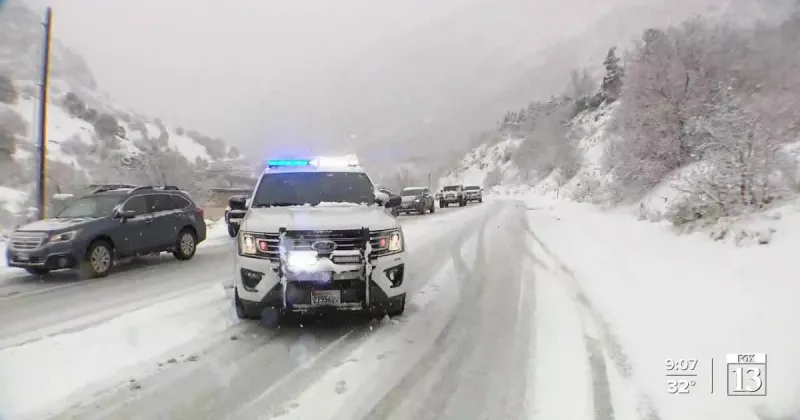
Photo: snowstorm ambulance blocked road Utah winter emergency, via ewscripps.brightspotcdn.com
Utah's winters are deceptively beautiful. Fresh powder on the Wasatch Front draws skiers from around the world, and the state's dramatic temperature swings create postcard-worthy landscapes. But beneath that beauty lies a serious and often underappreciated danger: when a medical emergency strikes during a winter storm, the same conditions that make Utah unique can also make survival extraordinarily difficult.
Emergency response times that typically run eight to twelve minutes in urban areas can stretch to forty-five minutes or longer when roads are buried under snow, ice, or both. In rural counties, that window can extend to several hours. For someone experiencing a cardiac event, a severe allergic reaction, or a major trauma, those extra minutes are not merely inconvenient—they are often fatal.
How Utah's Weather Patterns Create Compounding Hazards
Unlike many states where winter weather arrives predictably, Utah's geography produces some of the most volatile meteorological conditions in the American West. The collision of cold Arctic air masses with moisture-laden systems from the Pacific creates what forecasters call "orographic lift"—a phenomenon where air is forced upward by mountain terrain, cooling rapidly and dumping heavy snowfall in concentrated zones.
The Wasatch Range, the Uinta Mountains, and the plateaus of southern Utah each behave differently during storm events. Salt Lake and Utah counties can receive two to three feet of snow within twenty-four hours, while communities just thirty miles east—such as those in Summit or Wasatch counties—may experience whiteout conditions simultaneously. Meanwhile, areas like San Juan County in the southeast can swing from mild afternoon temperatures to dangerous overnight ice storms with little warning.
This unpredictability is the core of the problem. Residents who feel safe at noon can find themselves completely isolated by nightfall.
County-Specific Risks Every Utah Resident Should Know
Wasatch and Summit Counties: These areas sit along Interstate 80 and State Route 40, two corridors that frequently close during major storms. Residents of communities like Coalville, Heber City, and Park City face genuine isolation risk. Emergency Medical Services (EMS) units in these counties are well-trained but often must navigate the same treacherous roads as civilians.
Kane and Garfield Counties: Southern Utah's canyon country presents unique challenges. Roads through areas like the Grand Staircase-Escalante region can become impassable with just a few inches of ice. These counties operate with limited EMS staffing, meaning a single simultaneous emergency can exhaust local resources entirely.
Box Elder and Cache Counties: The northern reaches of the state, particularly areas west of Brigham City and north of Logan, are vulnerable to ground blizzards—storms where wind redistributes existing snow into near-zero visibility conditions without any new precipitation falling. These events develop rapidly and catch residents off guard.
Carbon and Emery Counties: The Price River corridor and the Castle Valley region experience severe cold snaps that can drop temperatures below minus twenty degrees Fahrenheit. Hypothermia becomes a compounding risk in any outdoor emergency scenario.
When Roads Close: Medical Emergencies That Cannot Wait
Certain medical conditions demand immediate professional intervention, and winter isolation makes them far more dangerous. Stroke, heart attack, severe diabetic episodes, and obstetric emergencies all fall into this category. Understanding which conditions require calling 911 immediately—regardless of road conditions—versus which can be managed temporarily at home is critical knowledge for every Utah household.
For cardiac events, time is irreplaceable. The American Heart Association's "chain of survival" begins with early recognition and early access to emergency care. If roads are impassable, call 911 immediately. Dispatchers can coordinate helicopter transport through the Utah Department of Public Safety's Air Medical program, which operates year-round and maintains protocols specifically for weather-related access challenges.
For stroke symptoms—sudden facial drooping, arm weakness, or speech difficulty—the same principle applies. Clot-busting medications lose effectiveness rapidly after symptom onset, and no amount of home preparation substitutes for hospital-level intervention.
For childbirth emergencies, 911 dispatchers are trained to provide real-time guidance for emergency deliveries over the phone. Do not attempt to drive through dangerous conditions; instead, call immediately and follow dispatcher instructions.
Preparing Your Home for Medical Isolation Events
The most effective preparation happens before the first storm of the season. Utah residents should treat winter medical preparedness as a structured, annual exercise rather than an afterthought.
Maintain a comprehensive first aid kit that goes beyond standard supplies. Include a blood pressure cuff, pulse oximeter, emergency thermal blankets, and a seven-day supply of all prescription medications. If any household member relies on electrically powered medical equipment—such as a CPAP machine, oxygen concentrator, or home dialysis unit—contact your county's emergency management office to register as a medical needs resident. Many Utah counties maintain priority lists for power restoration and welfare checks.
Install and test carbon monoxide detectors on every floor. Winter storms drive residents indoors, increasing the temptation to use generators, gas stoves, or portable heaters improperly. Carbon monoxide poisoning is responsible for dozens of preventable deaths in Utah each winter.
Establish a communication tree with neighbors and family members. If you live in a rural area or a neighborhood with limited cell coverage, identify a designated contact person who will check on your household if communication goes dark during a storm.
Know your nearest hospital and its capabilities. Intermountain Health, University of Utah Health, and other regional systems maintain trauma centers and specialty care facilities at various locations across the state. During a medical emergency, knowing in advance whether your nearest facility has cardiac catheterization capabilities or a neonatal intensive care unit can help you and dispatchers make faster decisions.
Vehicle Preparedness: Your Rolling Emergency Room
For many Utah residents, particularly those in rural counties, the vehicle is the first line of medical response. A properly equipped car or truck can sustain a patient long enough to reach professional care.
Every Utah vehicle should carry, at minimum: a quality first aid kit, emergency Mylar blankets, a flashlight with extra batteries, jumper cables or a portable jump starter, a small shovel, road flares or LED emergency triangles, traction aids such as sand or kitty litter, and a phone charger that works independently of the vehicle's engine.
Additionally, always inform someone of your travel route and expected arrival time before driving in winter conditions. The Utah Department of Transportation's UDOT Traffic app provides real-time road conditions and closure notifications—bookmark it on your phone before winter begins.
The Bottom Line: Preparation Is the First Responder
Utah's emergency services are skilled, well-equipped, and deeply committed to public safety. But even the best-trained paramedic cannot reach a patient through a closed canyon road or a whiteout on State Route 6. The responsibility for bridging that gap falls on residents themselves.
Winter preparedness in Utah is not a luxury or an overreaction—it is a fundamental aspect of living safely in one of America's most geographically dramatic states. By understanding your county's specific hazards, equipping your home and vehicle appropriately, and knowing when and how to call for help, you give yourself and your family the best possible chance of surviving whatever the season brings.
For county-specific emergency contacts, road condition updates, and additional medical preparedness resources, visit the Utah Division of Emergency Management at dem.utah.gov.